How to Write a Guest Post That Gets Approved

Writing a guest post that actually gets approved can feel challenging, especially for beginners or those just starting to submit content to other websites. While many people focus only on writing, the key to approval is understanding what publishers want, how to structure your post, and how to present it professionally. In this guide, we’ll break down everything you need to know to write guest important to understand why approval is crucial:
Exposure: Approved guest posts allow you to reach a new audience, increasing your visibility and authority in your nicposts that get accepted consistently
Backlinks: Guest posts often include backlinks to your website or portfolio, which can boost your SEO rankings.
Trust: Publishing on reputable websites builds your credibility as a writer or industry expert.
Opportunities: Once a publisher approves your first post, they may invite you to submit more in the future, opening doors for ongoing collaborations.
Getting approved isn’t just about writing well—it’s about meeting the needs of the website owner.
Step 1: Research the Website Before Writing
Before you even start writing your post, you need to understand the website where you want to publish:
Audience: Who reads the website? Are they beginners, professionals, or hobbyists? Tailor your content to their level of knowledge.
Style and Tone: Check existing posts to see if the tone is casual, formal, educational, or entertaining. Match your style to fit seamlessly.
Topics Covered: Look for gaps in their content or topics they cover regularly. Avoid repeating ideas already discussed.
Pro Tip: Take notes on the website’s most popular posts. This can help you align your post with what readers engage with most.
Step 2: Choose the Right Topic
Choosing the right topic is critical for approval. Here’s how to do it effectively:
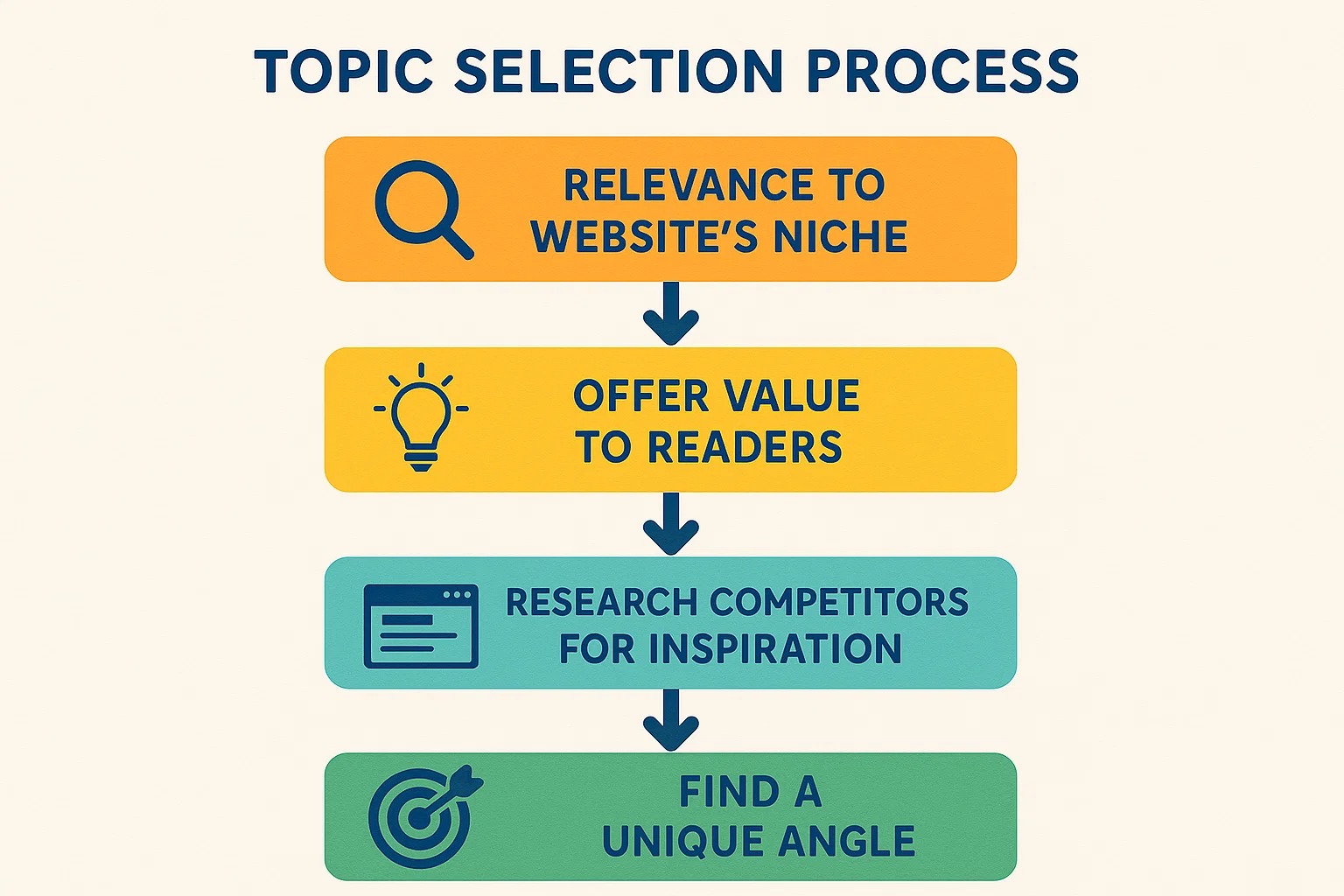
Be Relevant: Your topic must relate to the website’s niche. Irrelevant content is rarely approved.
Offer Value: Ask yourself, “Will this topic help the readers? Will it solve a problem or teach something new?”
Be Specific: Narrow down your topic. For example, instead of “SEO Tips,” write “5 Easy SEO Tips for Beginner Bloggers.”
Check Competitors: See what topics similar websites are publishing and try to offer a unique angle.
Pro Tip: Use tools like Ahrefs, SEMrush, or Rankar.ai to find trending topics and identify gaps in existing content.
Step 3: Follow Submission Guidelines
Most websites have guest posting guidelines, which are often listed under “Write for Us” or “Contribute.” Following these rules is crucial:
Word Count: Some websites want posts between 800–1,500 words, others may allow longer posts.
Formatting: Check if they prefer headings, subheadings, bullet points, or numbered lists.
Image Requirements: Some sites require original images or properly licensed visuals.
Bio & Links: Check if you can include your author bio and backlinks, and how many are allowed.
Pro Tip: Ignoring guidelines is a common reason guest posts are rejected, even if the content is good. Always read and follow them carefully.
Step 4: Structure Your Guest Post Professionally
A well-structured post makes it easier for editors to approve your content. Use the following format:
Title: Create a clear, engaging title that explains what the post is about.
Introduction: Start with a hook that grabs attention and explains what readers will learn.
Subheadings (H2 & H3): Break your content into digestible sections using subheadings.
Body: Provide actionable advice, examples, statistics, or step-by-step instructions.
Conclusion: Summarize key points and include a call-to-action, such as visiting your website or implementing the tips.
Pro Tip: Use short paragraphs and simple language, especially for beginner audiences. Long walls of text are harder to read.
Step 5: Write High-Quality, Original Content
Quality matters more than quantity. Editors want posts that:
Are original: Avoid copying or spinning content from other websites. Use plagiarism checkers like Grammarly or Copyscape.
Are informative: Include examples, research, and actionable tips.
Have proper grammar and spelling: Poorly written posts are often rejected immediately.
Pro Tip: Read your post aloud before submitting. If it sounds confusing or unnatural, rewrite it.
Step 6: Optimize for SEO (Without Overdoing It)
Even at a beginner-intermediate level, understanding basic SEO can increase your chances of approval:
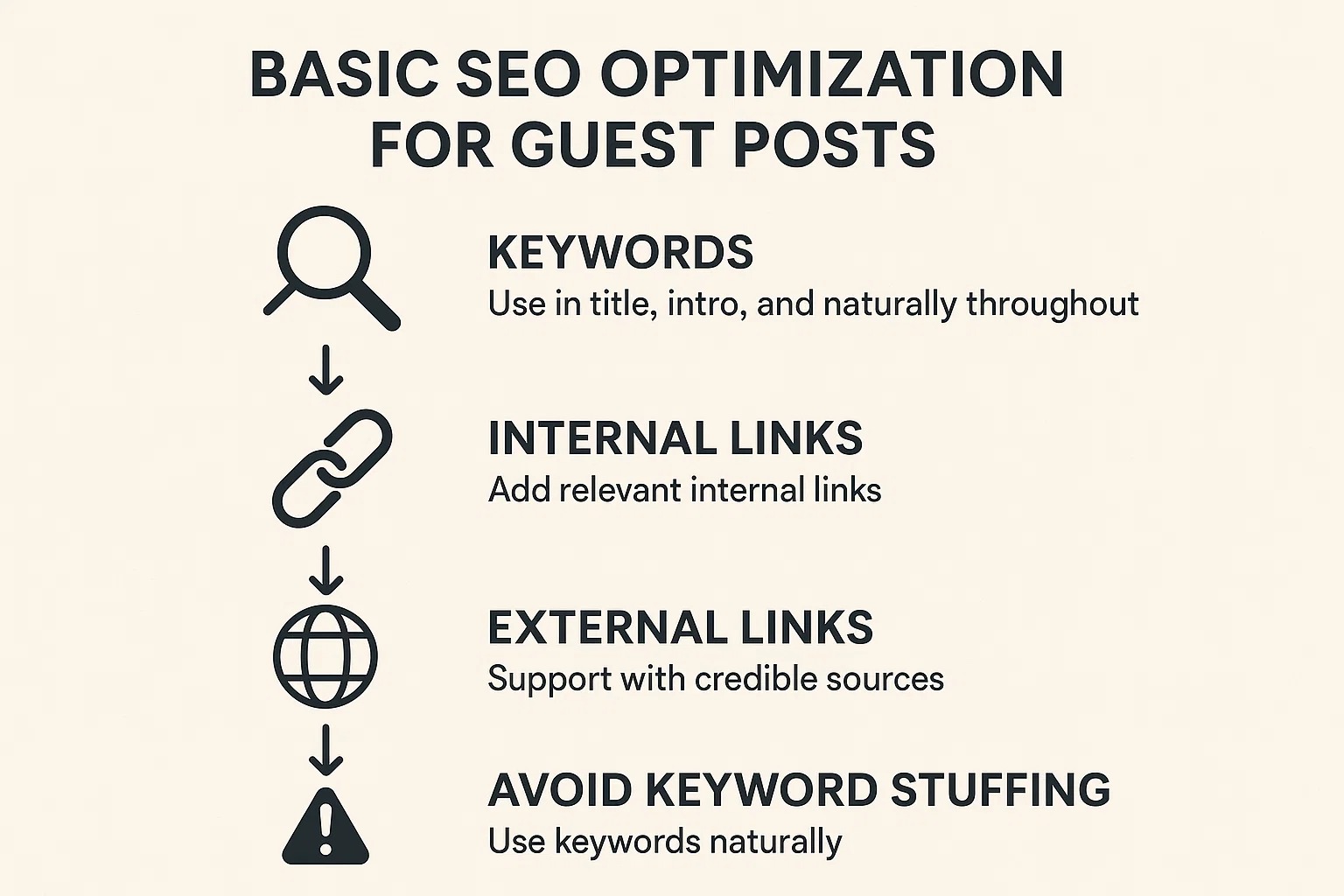
Keywords: Use your target keyword in the title, introduction, and naturally throughout the post.
Internal Links: Include links to relevant pages within the website if allowed.
External Links: Add credible sources to support your points.
Pro Tip: Avoid keyword stuffing. Content should always feel natural and reader-friendly.
Step 7: Include a Professional Author Bio
Most guest posts allow you to include a short author bio at the end of the post. This is your opportunity to introduce yourself and promote your website or service.
Keep it concise (2–3 sentences).
Include your expertise and achievements.
Add a link to your website or social media profile, if permitted.
Example:
“John Doe is a freelance writer and digital marketing enthusiast who helps small businesses grow online. Visit his blog at www.johndoe.com for more tips on guest posting and SEO.”
Step 8: Proofread and Edit
Before submitting, always proofread your post:
Check for spelling and grammar mistakes.
Ensure all links and images work correctly.
Make sure formatting is clean and consistent.
Pro Tip: Tools like Grammarly, Hemingway Editor, or even Microsoft Word’s Editor can help polish your content.
Step 9: Submit with a Polite and Professional Pitch
When submitting your guest post, include a short, professional pitch:
Mention the title and a brief summary of your post.
Explain why it would be valuable to the website’s audience.
Attach your post as per the website’s preferred format.
Example Pitch:
“Hello [Editor Name], I’ve written a guest post titled ‘5 Easy SEO Tips for Beginner Bloggers.’ It’s a 1,200-word guide with actionable tips that I believe your readers will find helpful. I’ve attached the post in Word format. I’d be happy to make any adjustments if needed. Thank you for your time and consideration!”
Step 10: Follow Up Professionally
If you don’t hear back within 7–10 days, send a polite follow-up email:
Reiterate your interest in contributing.
Ask if they had a chance to review your post.
Keep it short and professional.
Pro Tip: Avoid being pushy. A gentle follow-up increases your chances without annoying the editor.
Common Mistakes to Avoid
Ignoring guidelines: Always follow the website’s instructions.
Submitting low-quality content: Editors won’t approve generic or poorly written posts.
Overloading with links: Include only relevant links. Too many links look spammy.
Not proofreading: Spelling and grammar mistakes reduce credibility.
Pitching irrelevant topics: Make sure your post fits the website’s audience and niche.
How to Write a Guest Post with rankwrier
Writing a guest post that gets accepted is easy with Rank Writer Pro by Rankar.ai. The AI helps you create engaging, SEO-optimized, and high-quality content in minutes.
All these options — like Content Category, Type, AI Model, Creativity Settings, Generate, History, and Clear All — are available in the Rankar.ai Launchpad, where you can easily manage your entire writing process.
Here’s how to do it:
Choose Category – Select Guest Post in Rank Writer Pro.
Pick Content Type – Choose SEO Blog or Article.
Use GPT-4o Turbo – Generate natural, well-structured, keyword-rich content.
Add Keywords – Include relevant terms to boost ranking and visibility.
Check Visibility Score – Ensure your post meets SEO and quality standards.
✅ In short: With Rank Writer Pro in the Rankar.ai Launchpad, you can create professional guest posts that are optimized, engaging, and more likely to get approved by editors.
Conclusion
Writing a guest post that gets approved is not just about writing well—it’s about researching, understanding the audience, following guidelines, and presenting your work professionally. By following these steps, beginners can increase their approval rate and start building a strong portfolio of guest posts.
Remember: consistency is key. The more guest posts you write and submit correctly, the higher your chances of approval. Over time, this can lead to more exposure, backlinks, and even income from guest posting opportunities.
Take your time, write high-quality content, and always submit professionally. Approval will become easier with experience, and soon, guest posting can become a powerful tool for growing your online presence and expertise